

Insulation
How much attic insulation does a San Diego home actually need?
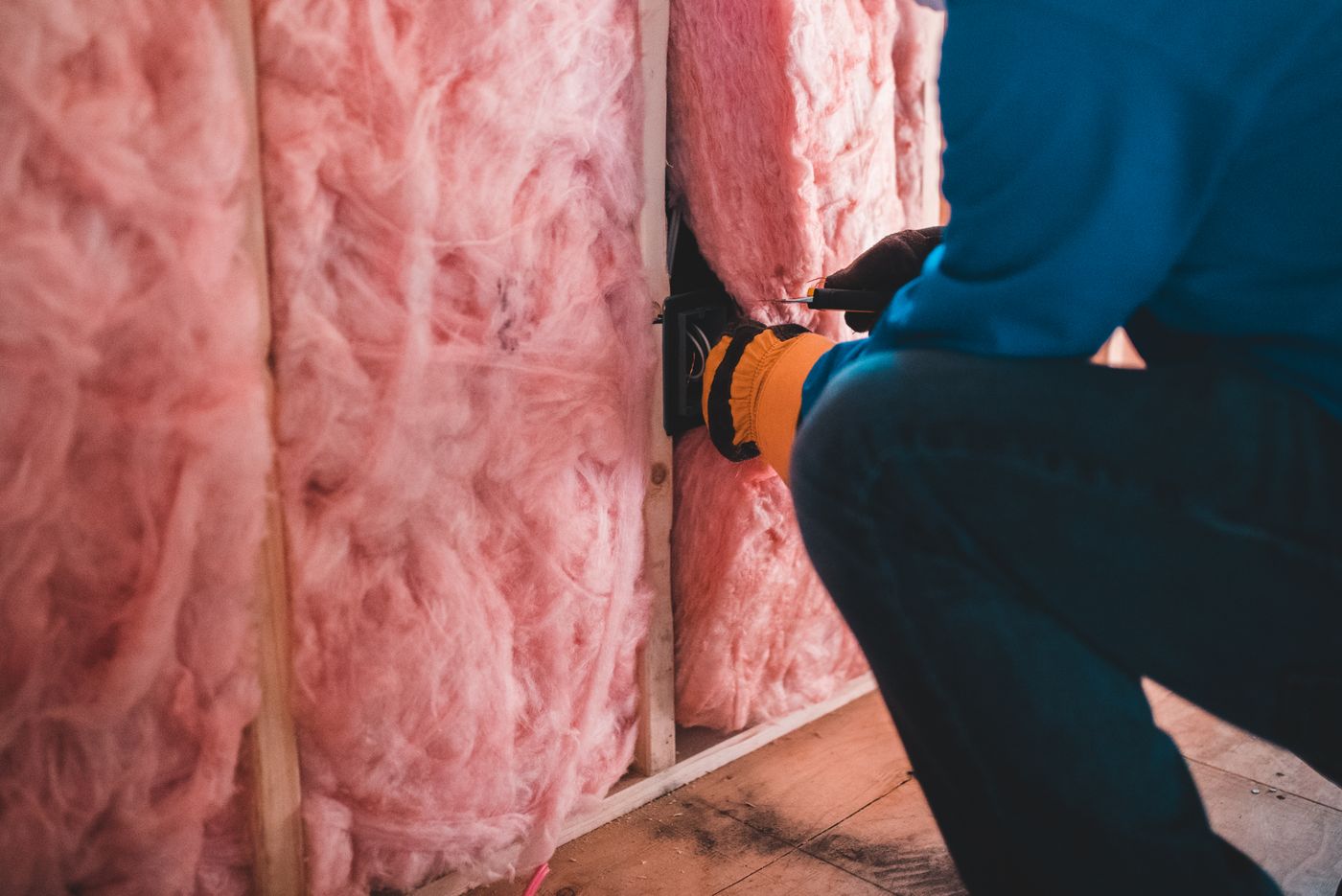
Almost every conversation about attic insulation starts in the wrong place: with a product. Homeowners ask which brand, which colour, fibreglass or cellulose. The question that decides whether the job works is much duller than that, and it is one you can answer yourself in about four minutes with a flashlight.
R-value is depth, not a label
R-value measures resistance to heat flow. A bag of blown insulation carries a chart on the side that says, in effect: to reach R-38 you must install this many bags over this many square feet, and the settled result must be this many inches deep. Miss any one of those three and the R-value on the invoice is fiction.
This is why installed depth is the only number worth arguing about. A crew can blow the right product and still leave you two-thirds of the performance, simply by spreading fewer bags over more area. Nothing about the finished attic looks wrong. It just does not work.
What to look for when you put your head through the hatch
- Can you see the tops of the ceiling joists? If the framing is visible as a grid of parallel lines across the attic, your insulation is roughly level with the joists, which in most homes means somewhere around R-19. That is well under what a Southern California attic should carry.
- Is the material flat and grey rather than fluffy? Insulation works by holding still air. Once it is compacted, walked on or matted down it has lost the air and kept only the thickness.
- Is there a clear ring of bare ceiling around the recessed lights? That is often correct for older fixtures that are not IC-rated, but it also means those are direct openings between your house and the attic.
- Is the depth even across the whole attic, or deep near the hatch and thin at the far eaves? Thin at the edges is the single most common shortcut, because nobody crawls out that far to check.
Why we set depth markers before we blow
A depth marker is a simple ruler stapled to the framing, marked with the target inches, placed across the attic before any material goes in. When the job is done anyone can walk the attic and read the coverage off the markers. Not the crew's word, not a line on an invoice: a physical measurement anyone can repeat.
We set them on every insulation job for exactly that reason. It is a cheap piece of plastic that removes the only part of this trade a homeowner cannot otherwise verify.
Air sealing comes first, and it is not optional
Insulation slows conduction. It does nothing about air moving through a hole. Your ceiling is full of holes: recessed light housings, the top plates of every interior wall, plumbing stacks, wiring penetrations, bath fan housings and the attic hatch itself. Warm air escapes upward through them and drags attic air into the house behind it.
Blowing insulation over unsealed penetrations gets you the depth without the comfort, because the air keeps moving straight through the fibre. Sealing first is what makes the second half of the job worth paying for.
A word about the 20% figure
You will see it everywhere, including on our own pages: a properly insulated home can lower its energy bill by around 20%. It is a reasonable rule of thumb and a terrible promise. The real number depends on your ceiling area, what is up there now, where your ducts run, how the house is oriented and how you actually run your system.
What we can tell you honestly is what is up there today, measured, photographed and written down. What that is worth to your specific bill is a calculation, not a slogan.
Want the measurement without the sales call? The evaluation is free and it is yours whether you hire us or not. Call (619) 777-7021.
Related services
Insulation Installation
Remove what is compacted or contaminated, air-seal the ceiling plane and reinstall to the depth your home actually needs.
See this service