

Radiant barrier
What a radiant barrier actually does in a Southern California summer
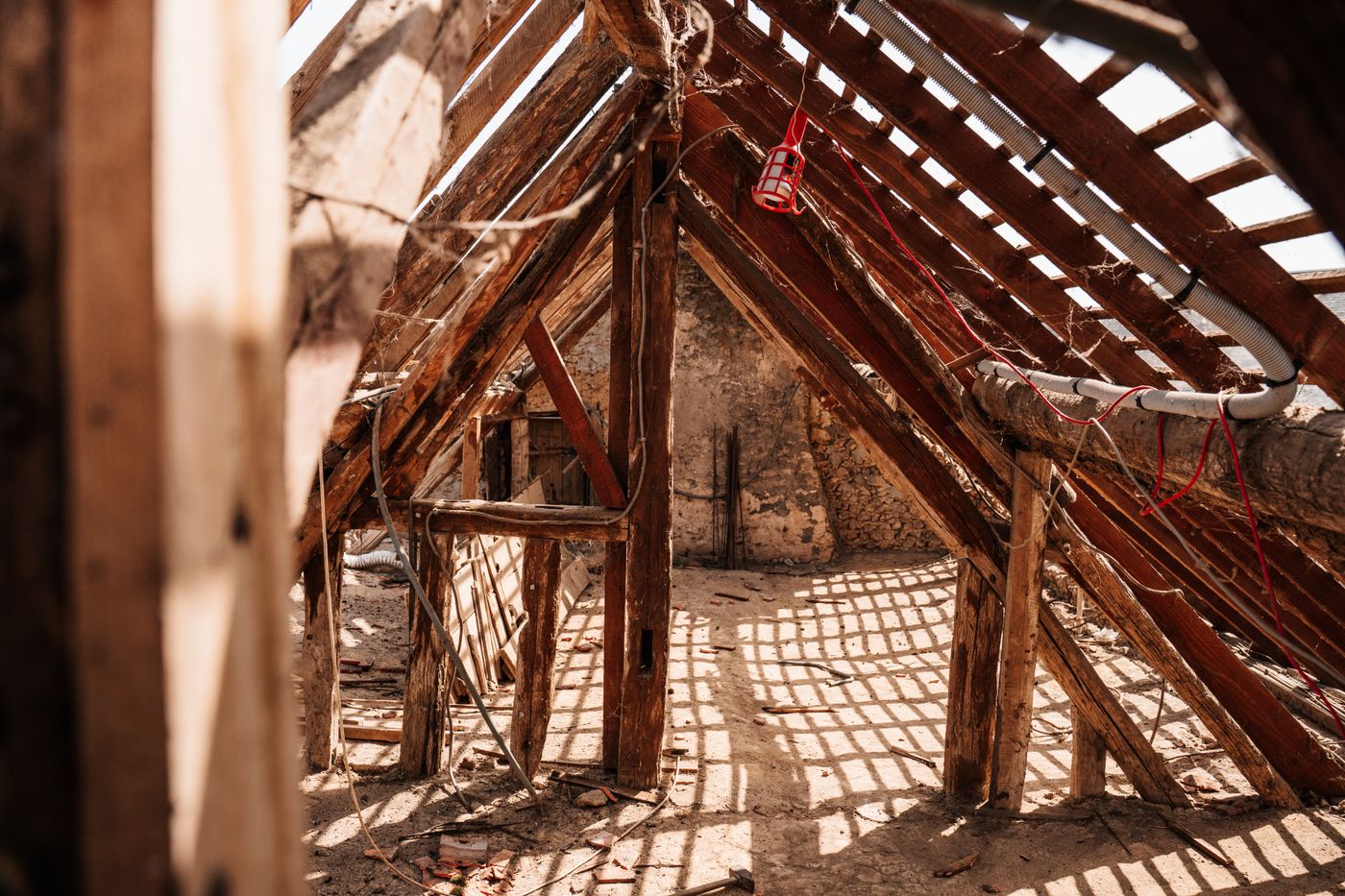
Heat gets into your house three ways, and almost every product sold to stop it only addresses one of them. Understanding which is which is the difference between buying the right thing and buying the thing that was on sale.
Conduction is what insulation is for
Conduction is heat moving through material by contact: from the hot attic air into your ceiling drywall and out into the room. Insulation slows conduction by trapping still air in a fibrous mat. Its whole job is to be a bad conductor sitting between two temperatures.
Radiation is a different problem entirely
When the sun's rays reach your roof, they heat the roofing and the deck. That hot deck then radiates energy downward across the open attic to every surface below it, including the top of your insulation and the outside of your ducts. Radiation crosses empty space. It does not need air to carry it and insulation does not intercept it.
This is why an attic can be brutally hot on a day that is only pleasantly warm outside, and why the ducts running through that attic deliver air several degrees warmer than what left the equipment.
What the barrier does about it
A radiant barrier is a foil-faced sheet installed against the underside of the roof deck. Instead of absorbing the radiant energy coming off the deck, it reflects the great majority of it back. Installed correctly, that is up to 97% of the sun's radiant heat turned around before it reaches your ceiling or your ductwork.
The result is not usually a colder house on its own. The result is a much cooler attic, ducts that stop being cooked, and an air conditioner that stops fighting a load it should never have had.
The two ways it stops working
- No air space. A reflective surface has to face an open gap. Lay a radiant barrier flat on top of insulation and it becomes a conductor in contact with the thing it was supposed to protect. It must run with the rafters, facing down into the attic volume.
- Dust. A layer of dust on the reflective face is a layer of ordinary matte material, and matte material absorbs and re-radiates. This is the second argument for installing it on the underside of the deck facing down, where dust does not settle on it, rather than face-up on the attic floor.
Ventilation has to survive the installation
An attic gets rid of accumulated heat and moisture by moving air from the soffit vents at the eaves up to the ridge. A radiant barrier installed carelessly can block that path at the eave, and an attic that cannot breathe trades a heat problem for a moisture problem — which is a much more expensive problem.
We detail around eave, soffit and ridge ventilation deliberately, and around vents, chimneys and mechanical equipment. It is slower. It is also the difference between a barrier that works for twenty years and one that causes a callback.
Does it replace insulation?
No, and anyone who tells you it does is selling. They handle different mechanisms. In San Diego County, where the sun is the dominant load for most of the year, the pair together does something neither does alone. We quote them separately so you can see what each one is contributing rather than buying a bundle on faith.
Attic unbearable by 2pm? We will measure it, photograph it and tell you which of the two you actually need. (619) 777-7021.
Related services
Radiant Barrier Installation
A reflective layer under the roof deck that turns back the sun's radiant heat before it ever reaches your ceiling.
See this service